
Located at the crest of a hill and surrounded by farmland, the brief for this new home was actually very simple – build a home that takes advantage of the views whilst reducing the environmental impact.
Our client had already explored whether the existing dwelling – a 1900s solid-wall cottage which had already been extended and modified quite a bit – could be remodelled and retrofitted, but it was very compromised in terms of size and orientation, and would have required so much remedial and alteration work that the benefits of keeping the original structure were far outweighed by the benefits of a sustainable new build.
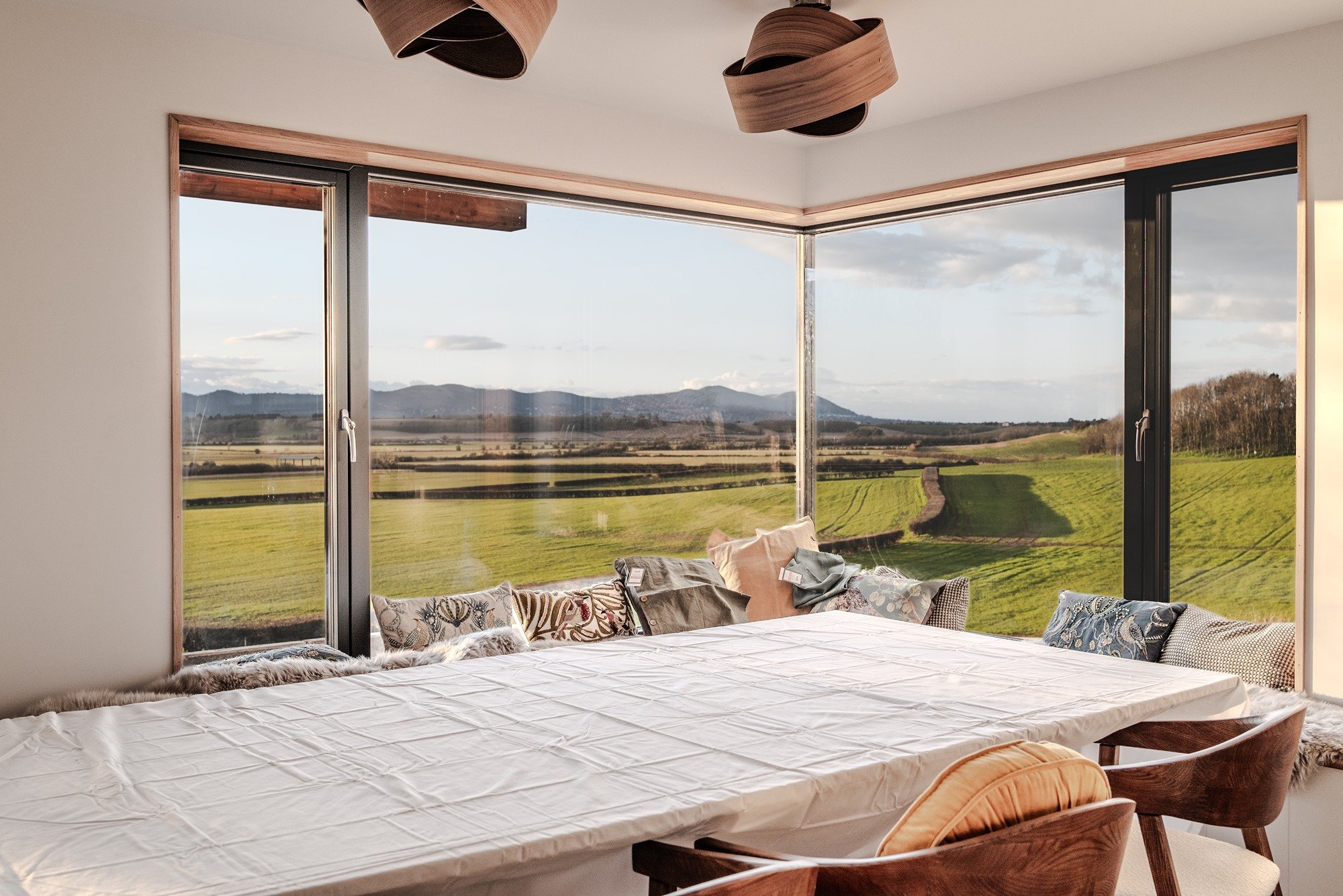

The building has been designed with a compact form which maximises performance and reduces cost. To break up the visual mass, a few key design moves were introduced, and these have other benefits as well, helping to realise more value from the project. The ‘cranked’ plan allows the building to properly address the lane, whilst also taking in panoramic views of the Malvern Hills AONB. The wrap-around veranda provides valuable sheltered outside spaces and additional space for biodiverse green roof coverings. It also provides a key ‘breakpoint’ between different materials above and below, making the building appear smaller and more integrated.
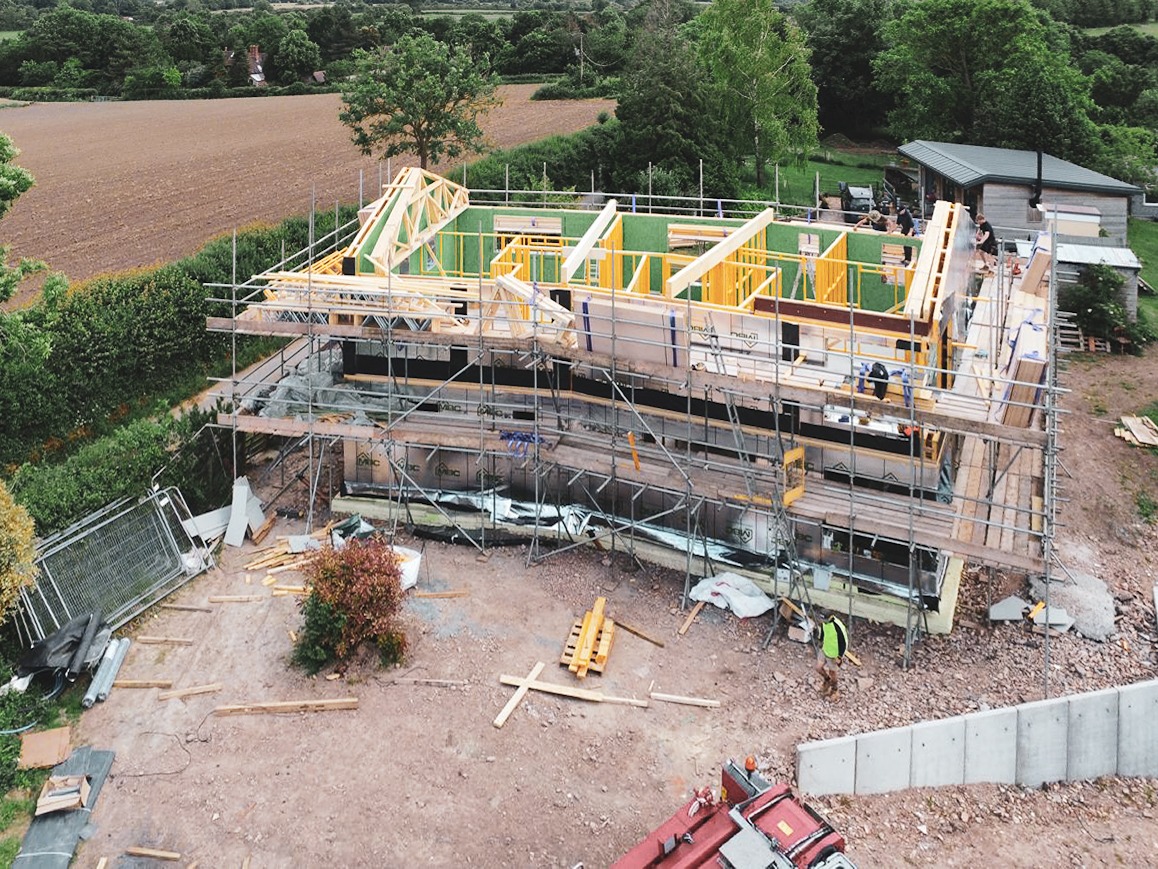
Key statistics
Estimated heat demand: 14 KWh/m2·yr (PHPP)
Airtightness: 0.26 ACH
Team
Architecture and energy modelling : Form+Folk
Timber frame: MBC Timber Frame
Contractor: Self-managed by Client
Photography: David Holland/Client
Type
Certified Passive House
Location
Near Malvern, Worcestershire
Status
Complete